
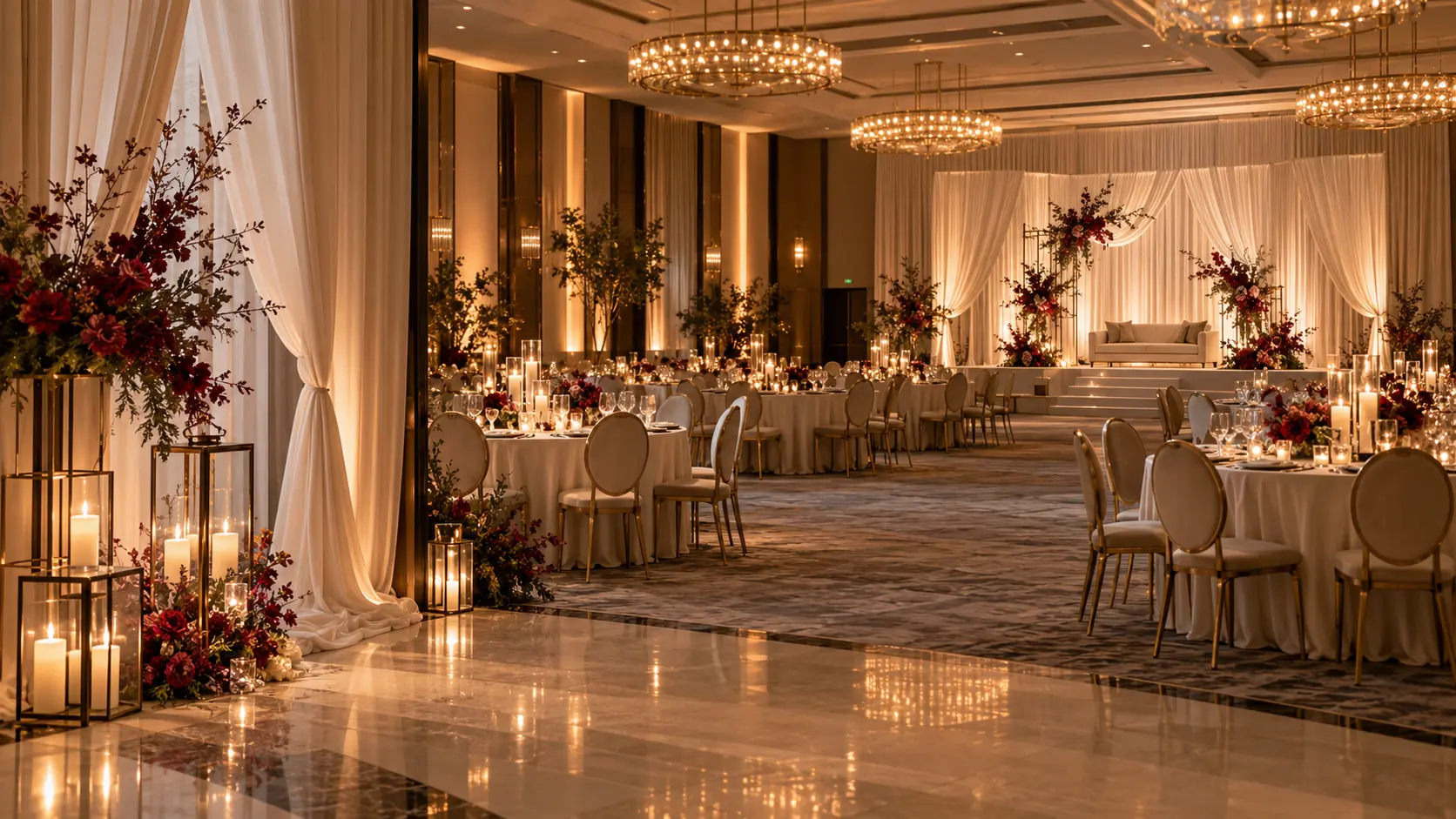
For years, the backdrop has been the centre of wedding décor. It frames the couple, becomes the setting for important photographs and often receives the largest share of the décor budget.
I understand why. A beautiful backdrop can define a room.
But can one decorated wall carry an entire wedding?
I don’t think the backdrop era is ending. I think the backdrop is losing its job as the whole design.
The next shift in wedding décor is not about abandoning backdrops. It is about creating venues that feel connected beyond one camera angle. Lighting, guest tables, entrances, ceremony spaces and the architecture of the venue should feel like parts of the same story.
A backdrop should be one chapter in the room—not the whole story.
How the Backdrop Became the Entire Wedding
Social media changed how weddings are planned.
Couples now find inspiration through photographs that usually show one carefully styled angle. We see the couple seated in front of a floral installation, a close-up of a welcome sign or a perfectly arranged table.
What we do not always see is the rest of the room.
Sometimes the main backdrop is detailed and beautiful, while the entrance, tables and surrounding space feel unrelated. It works in a photograph, but the design ends as soon as you move outside the frame.
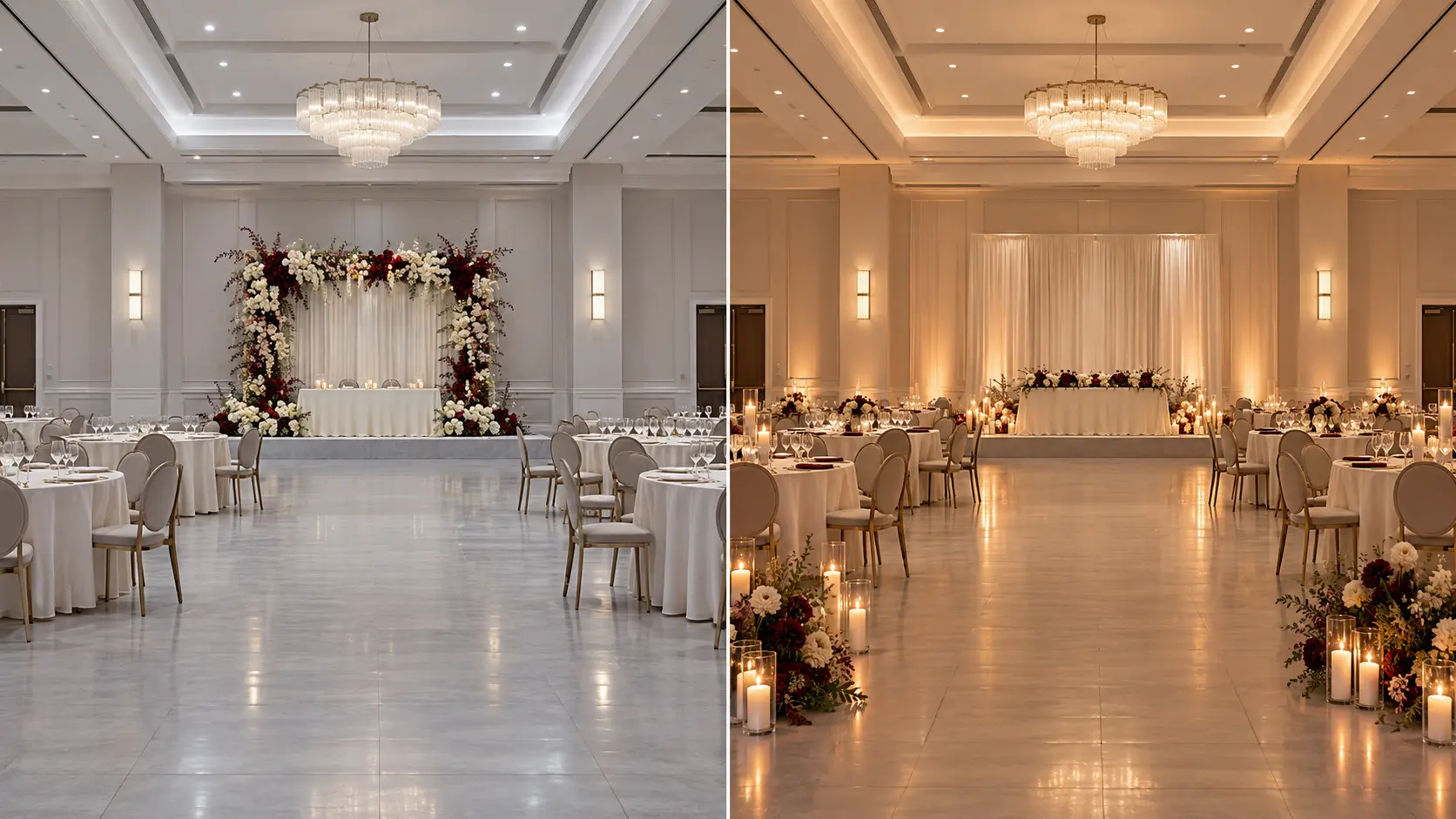
This does not mean every corner needs décor. In fact, trying to decorate everything can make a venue feel cluttered. But the important areas should speak to one another.
The backdrop may introduce the main fabric and floral palette. The entrance can repeat one material or colour. The tables might carry the same candlelight. A welcome sign can connect the typography and details.
The elements do not need to match perfectly. They simply need to feel like they belong to the same event.
Immersive Décor Does Not Mean More Décor
“Immersive” can sound expensive. It may bring to mind ceiling installations, walls covered in flowers and large custom builds. Those elements can be beautiful, but they are not what makes a design immersive.
Immersive décor means that guests feel the atmosphere around them rather than seeing it only in front of them.
- Warm lighting throughout the room
- Draping that responds to the venue’s architecture
- A consistent but varied colour story
- Candles repeated in selected areas
- Materials that feel connected
- Thoughtful transitions between the entrance, ceremony and dining space
- Music, scent and movement supporting the visual design
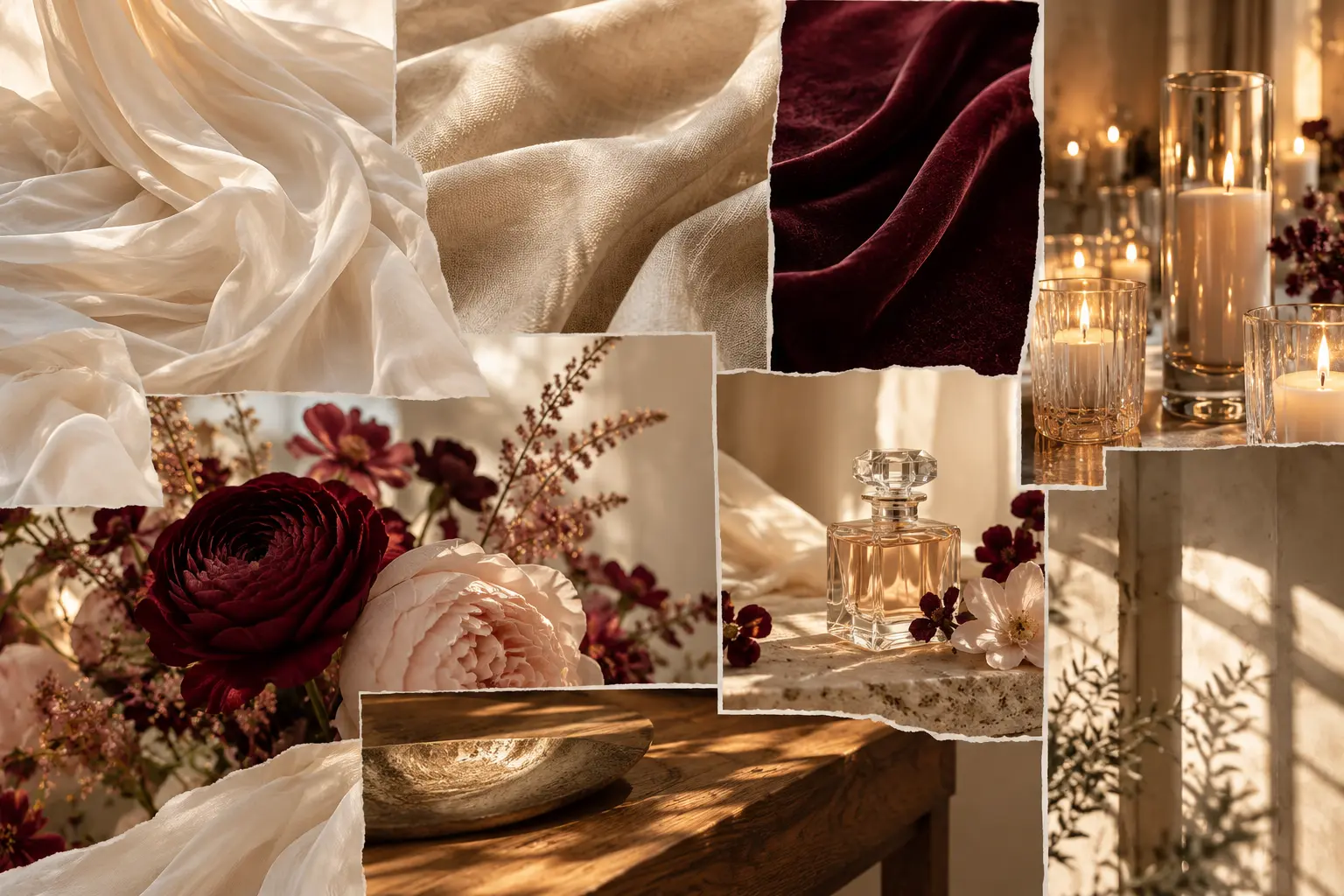
A room can feel immersive with restrained décor if every decision supports the same mood. And a room can still feel disconnected despite having a large décor budget if every feature was designed separately.
Lighting May Matter More Than Additional Flowers
This may be an unpopular opinion coming from a decorator, but more flowers will not fix bad lighting.
Flowers add colour, softness and life. But lighting determines how the entire room is experienced.
Cold overhead lighting can flatten warm fabrics, weaken candlelight and make even a carefully selected palette feel harsh. The right lighting can add depth to simple draping, create shadows across textured surfaces and make a small floral arrangement feel intentional.
- Can harsh ceiling lights be reduced?
- Is the couple properly lit?
- Does the backdrop need focused lighting?
- Are the guest tables too dark?
- Can candles or warm uplighting connect different areas?
- How will daylight change as the event moves into evening?
Lighting should not be treated as a technical detail added after the décor is complete. It is part of the décor. If the room does not feel right, another row of flowers may not be the answer.
Design the Guest Journey, Not Every Corner
Guests do not experience a wedding through one photograph. They experience it as a sequence.
They arrive at the venue. They find the entrance. They notice the welcome sign. They move toward the ceremony. They sit, eat, talk and explore the space.
Good event design considers this journey.
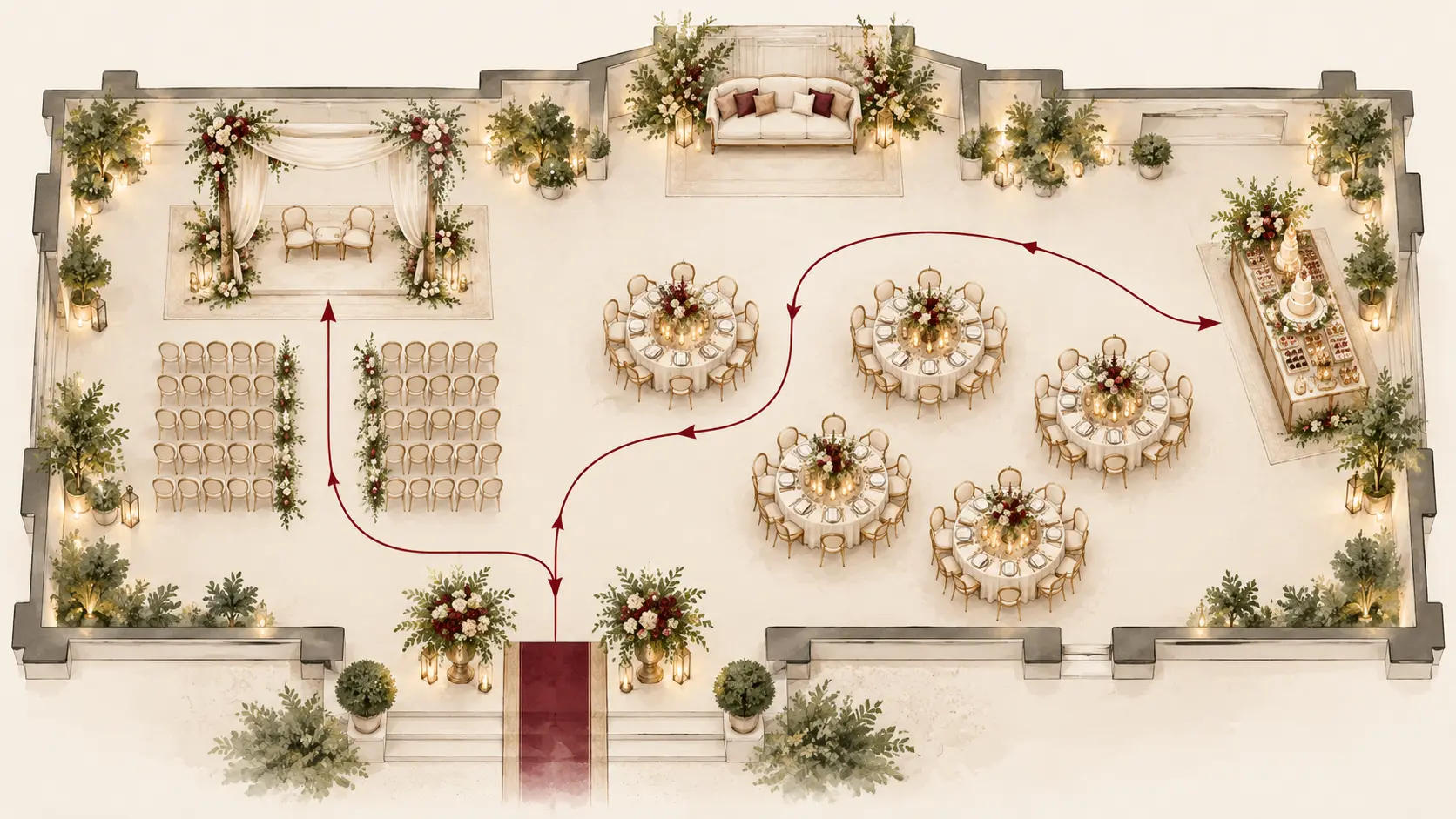
The entrance does not need to be elaborate, but it should signal that guests have arrived somewhere special. The ceremony area should feel focused and intimate. The dining area should feel comfortable. The stage or couple’s seating should be visible without overwhelming everything around it.
I would rather create three connected moments properly than spread décor thinly across ten unrelated areas.
- A warm entrance with a sign and one floral arrangement
- A strong ceremony or stage focal point
- Candlelight and restrained details across the guest tables
That can create a more complete experience than using most of the budget on one large backdrop and leaving the rest of the room untouched.
Your Venue Is Already Part of the Décor
A greenhouse, mosque, ballroom and family home should not receive the same design.
A greenhouse already offers greenery, natural light and architectural detail. Covering all of that with heavy draping may work against the reason the venue was chosen.
A mosque requires sensitivity to the ceremony, movement, sightlines and the needs of the imam, witnesses and family.
A ballroom may need softness, warmth and visual scale. A home may require smaller pieces, careful furniture placement and a design that allows people to move comfortably.
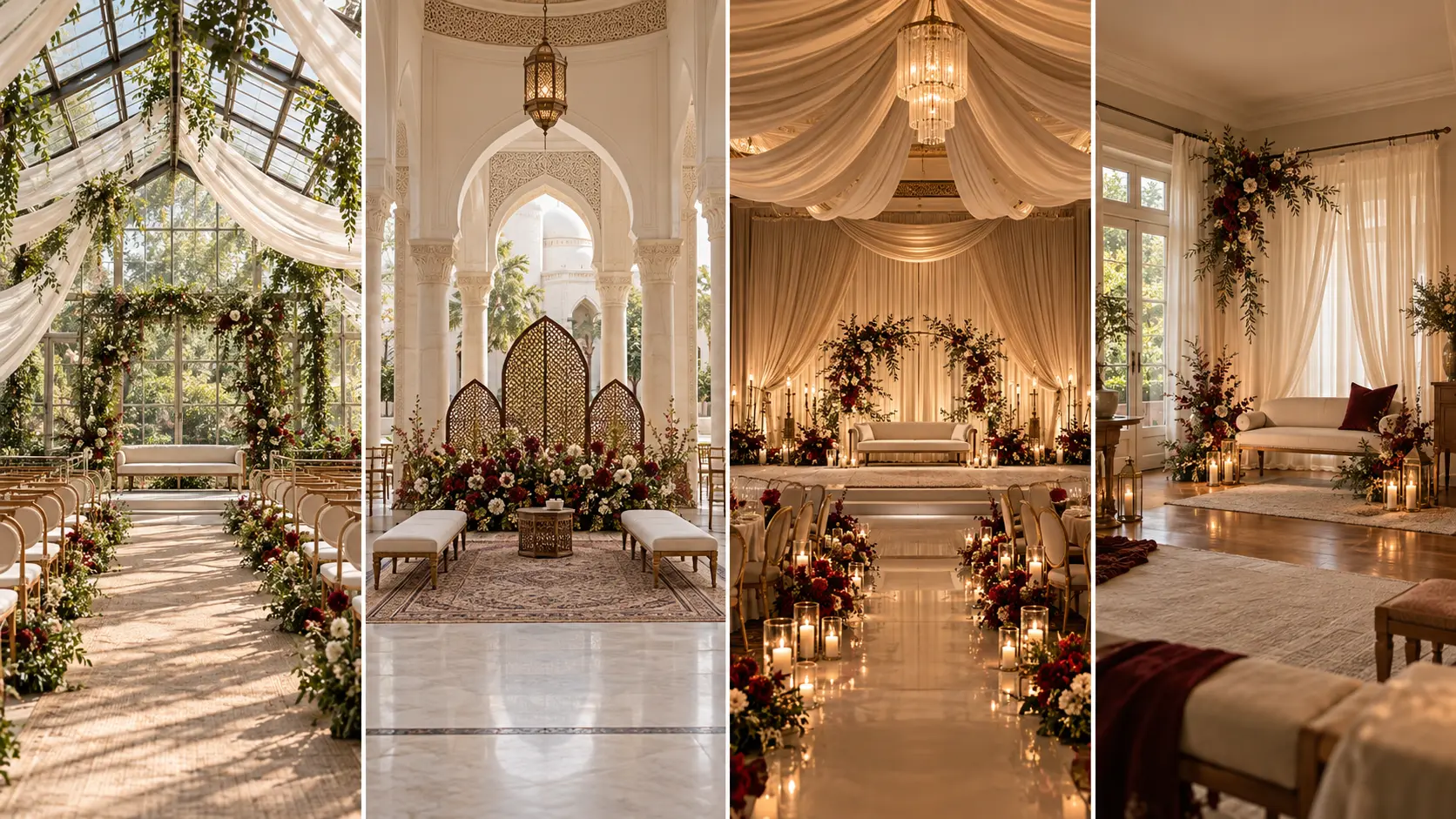
The venue should participate in the design.
- Ceiling height
- Existing wall colours and finishes
- Natural and artificial lighting
- Entrances and exits
- Sightlines
- Available floor space
- Venue installation rules
- The areas guests will actually use
The goal is not always to hide the room. Sometimes the best design decision is to frame what is already beautiful.
Repurposing Is Becoming Part of Better Design
Repurposing wedding décor is often presented as a way to save money. It does help a budget go further, but I also think it can create a more connected event.
A Nikkah divider can later frame a portrait, dessert or favour area. Ceremony florals can move to the sweetheart table. Entrance arrangements can be brought inside after guests arrive. Benches, candles and side props can be rearranged after the ceremony.
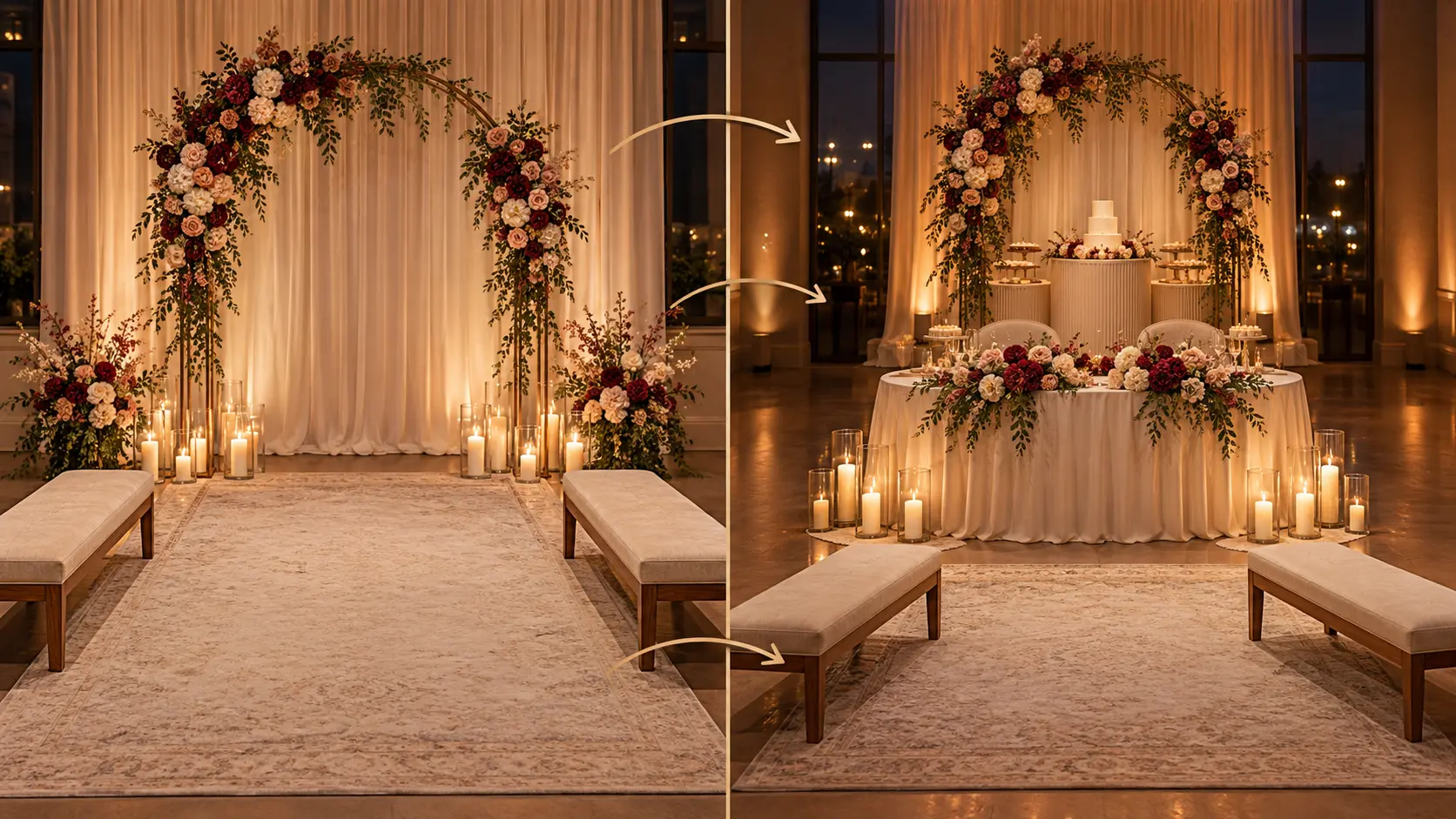
The same pieces appear in different parts of the celebration, which naturally creates continuity. But repurposing needs to be planned before the event.
- Who will move the décor?
- When can it be moved without interrupting guests?
- Is the item safe and stable enough to relocate?
- Will the second space be ready?
- Does the timeline allow for the change?
- Are fresh florals and candles suitable for both uses?
A heavy divider cannot simply be carried aside without considering its base and balance. Florals installed directly onto a structure may not transfer easily. Candles may need to be extinguished and reset.
Repurposing works best when it is designed into the plan—not improvised during the event.
The Vendor Conversation Needs to Happen Earlier
Whole-room design requires collaboration.
The decorator cannot make the best lighting decisions without understanding the venue’s power access and restrictions. The photographer needs clear sightlines. The planner needs enough time for room changes. The caterer needs tables that are beautiful but still functional. The venue needs to approve installation methods.
These conversations often happen too late.
- Where will guests enter and move?
- Which lights can be adjusted or switched off?
- What can be installed on walls or ceilings?
- When can vendors access the venue?
- Can ceremony décor move during cocktail hour?
- Will centrepieces interfere with service or conversation?
- Which angles will photographers use?
A strong design should not create a problem for the next vendor. The most successful weddings happen when every vendor understands the complete experience rather than protecting only their individual piece of it.
Where I Would Spend a Limited Décor Budget
Most couples do not have an unlimited budget. That makes prioritization more important than adding more items.
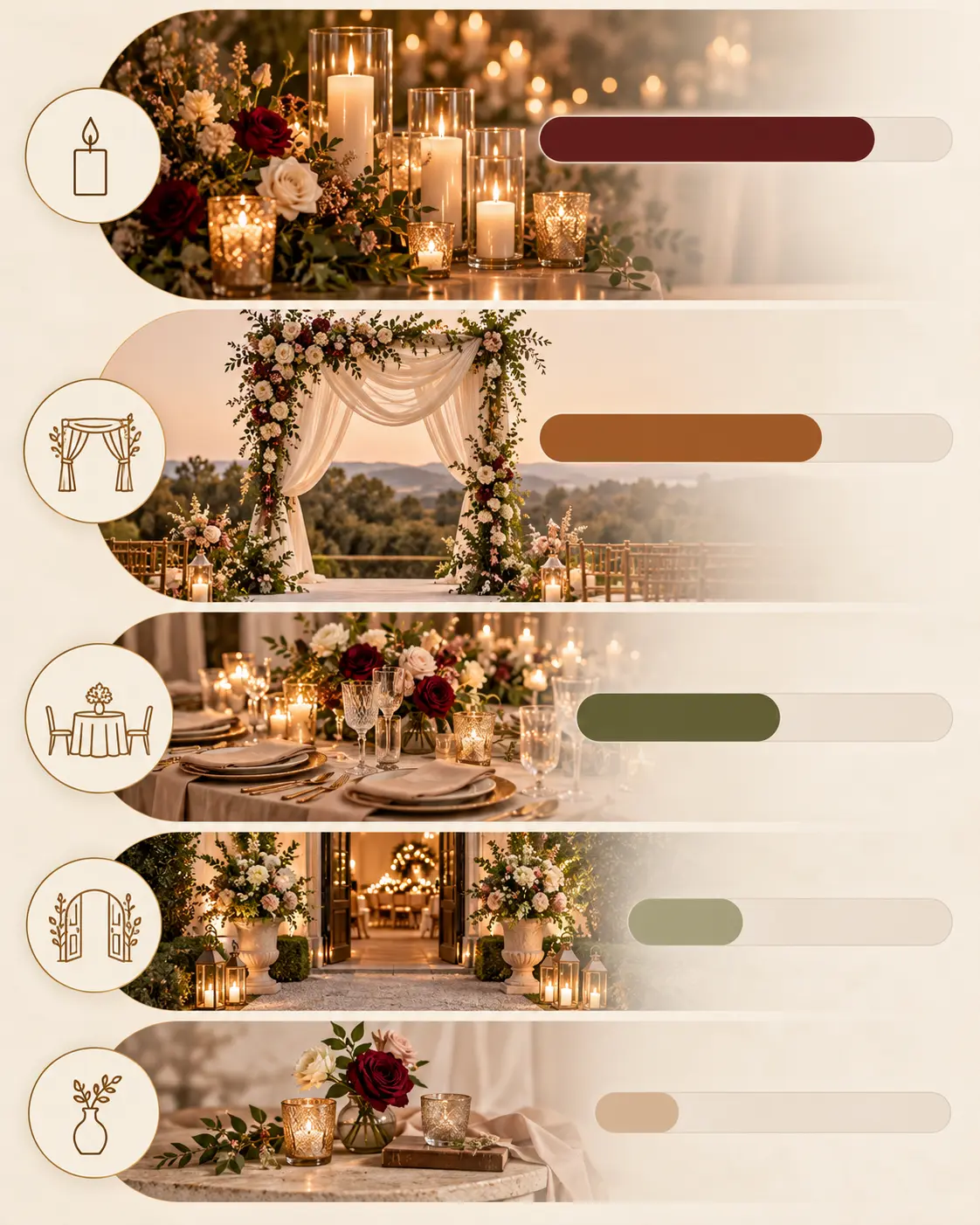
1. Lighting and atmosphere
Fix the quality of light first. Warm lighting, focused illumination and candlelight can affect every part of the venue.
2. One strong ceremony or stage focal point
Create a place that feels intentional, frames the couple properly and fits the scale of the room.
3. Guest tables at the correct scale
This does not require elaborate florals on every table. Linens, candles, small arrangements and careful spacing can create a finished room.
4. A clear arrival moment
A welcome sign, entrance arrangement or simple draped feature helps introduce the event’s visual language.
5. Smaller styling details
Add menus, favours, stationery and decorative accents only after the main areas work together.
Do not fully design one wall while ignoring the room around it.
So, Is the Backdrop Really Over?
No.
Backdrops will remain important because couples need a visual focal point. They help define ceremony spaces, frame photographs and transform venues that may otherwise feel plain.
But the backdrop should no longer be expected to do everything.
A beautiful wall cannot fix uncomfortable seating, harsh lighting, blocked sightlines or a room with no connection between its spaces.
The future of wedding décor is not necessarily bigger or more expensive. It is more aware.
It understands the venue. It considers the guest journey. It uses lighting as part of the design. It allows ceremony pieces to live beyond one moment. And it creates several connected experiences instead of one isolated photograph.
The backdrop era is not ending.
But the era of asking one backdrop to carry the entire wedding might be.
Let’s design the whole experience
Khwaab Events creates thoughtful Nikkah, wedding and event décor across Mississauga, Brampton, Toronto and the GTA.